
Destination
Dodecanese Islands

Curving tightly against the Turkish coast, the Greek Dodecanese islands showcase strong medieval architecture and monuments, in addition to the ancient Greek sites. Highlighting these islands are beautiful beaches, ancient ruins, medieval old towns and diverse trails for remote hiking and biking.
The Dodecanese Islands are located far from the Greek mainland, giving them a remote feeling and the preservation of much tradition and culture. Home to a wide natural variety, these islands are home to everything from the barren rock of Kalymnos to the high pine forests of Kos, and are conveniently located close to the Aegean coast of Turkey.
- May - October
- Biking, Hiking, Cuisine, Family, Rock climbing
- 4 - 8 Days
- Hand Picked Top 10
- Whiz down the singletracks of K
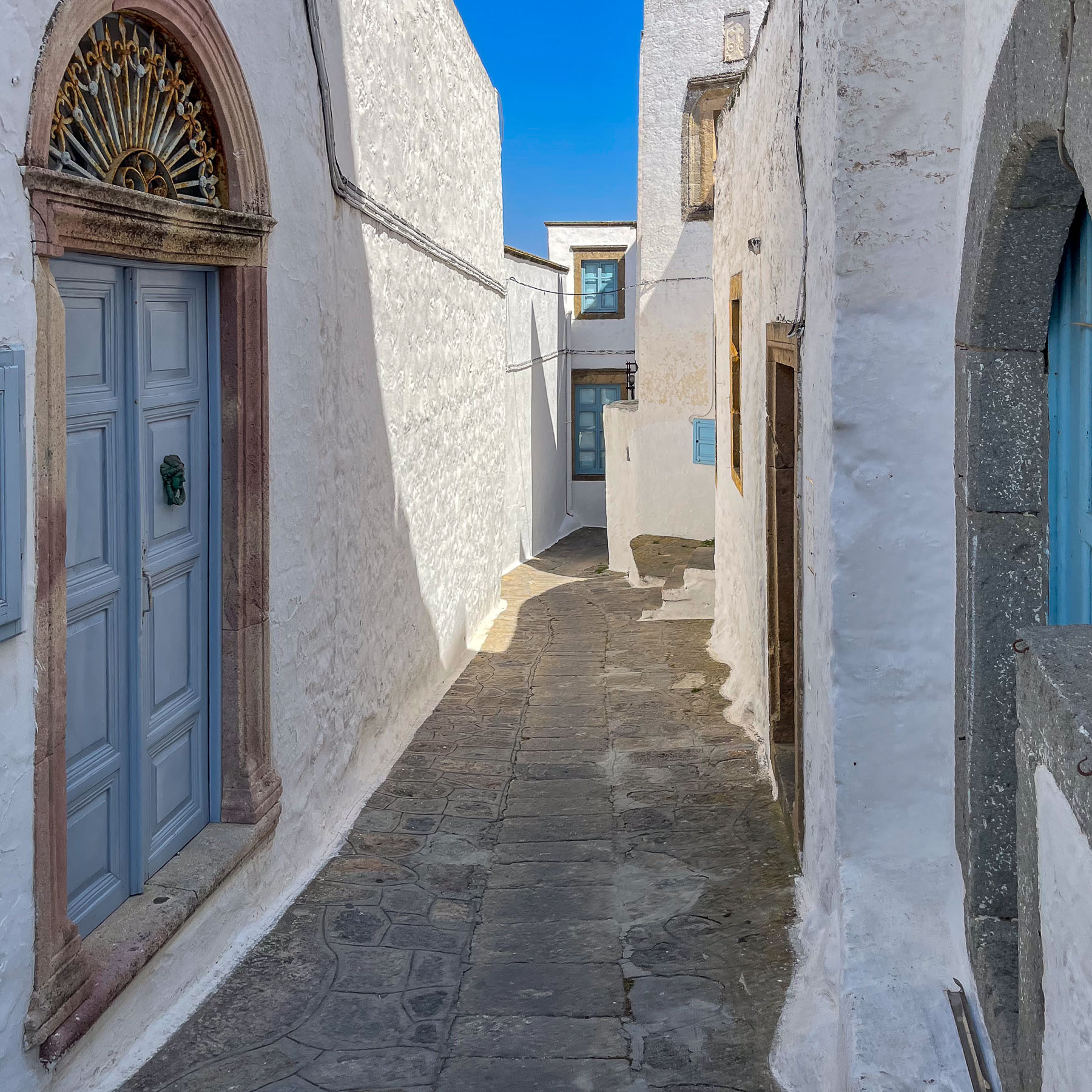
- Wander the narrow streets of Patmos’s Chora
- Scale seaside cliffs while rock climbing in Kalymnos
- Refresh your body and mind in the tranquil waters of Lipsi
- Revive your inner-calm on remote Astypalaia
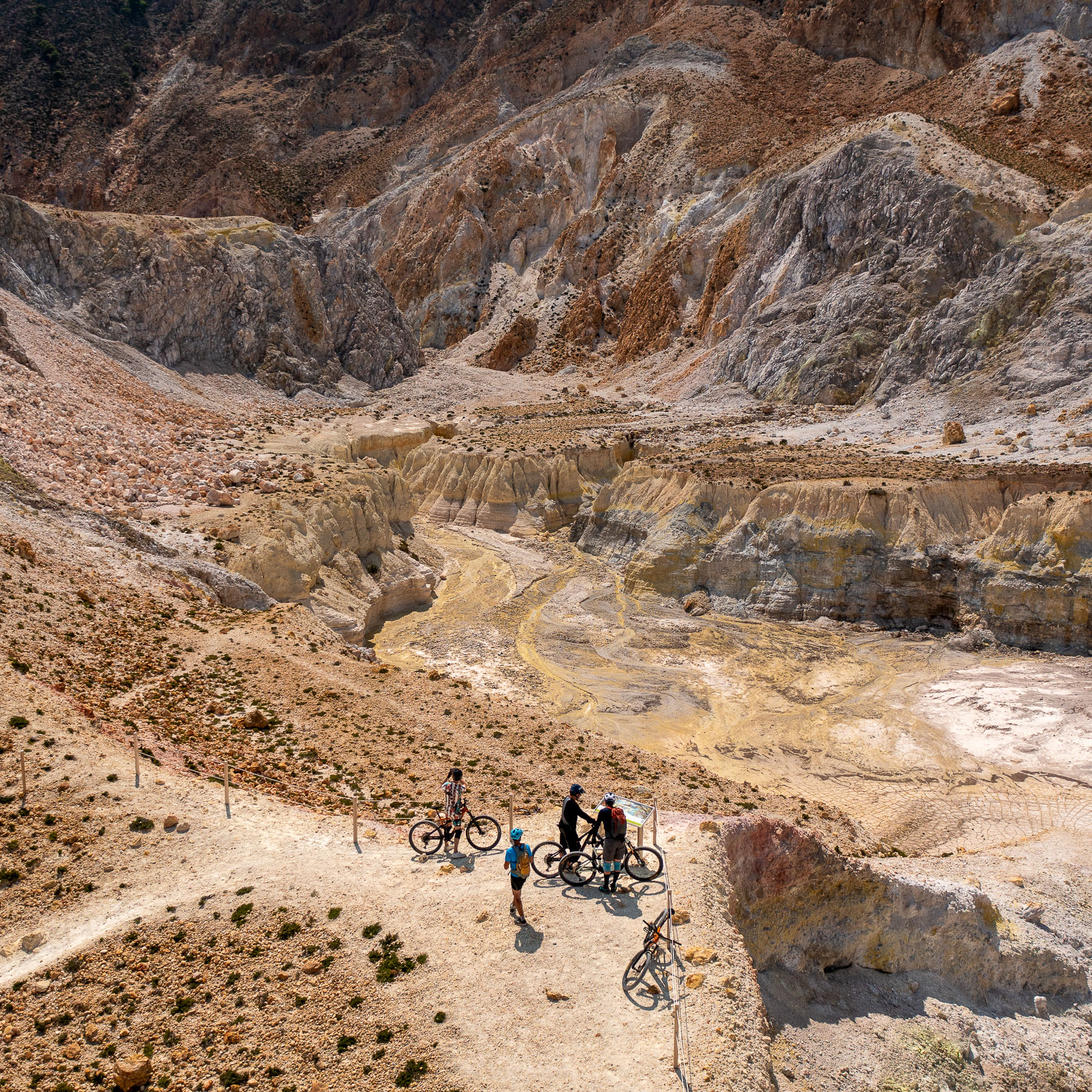
- Cycle through the lunar landscape of volcanic Nisyros
- Trade tourists for locals in the backstreets of Nisyros
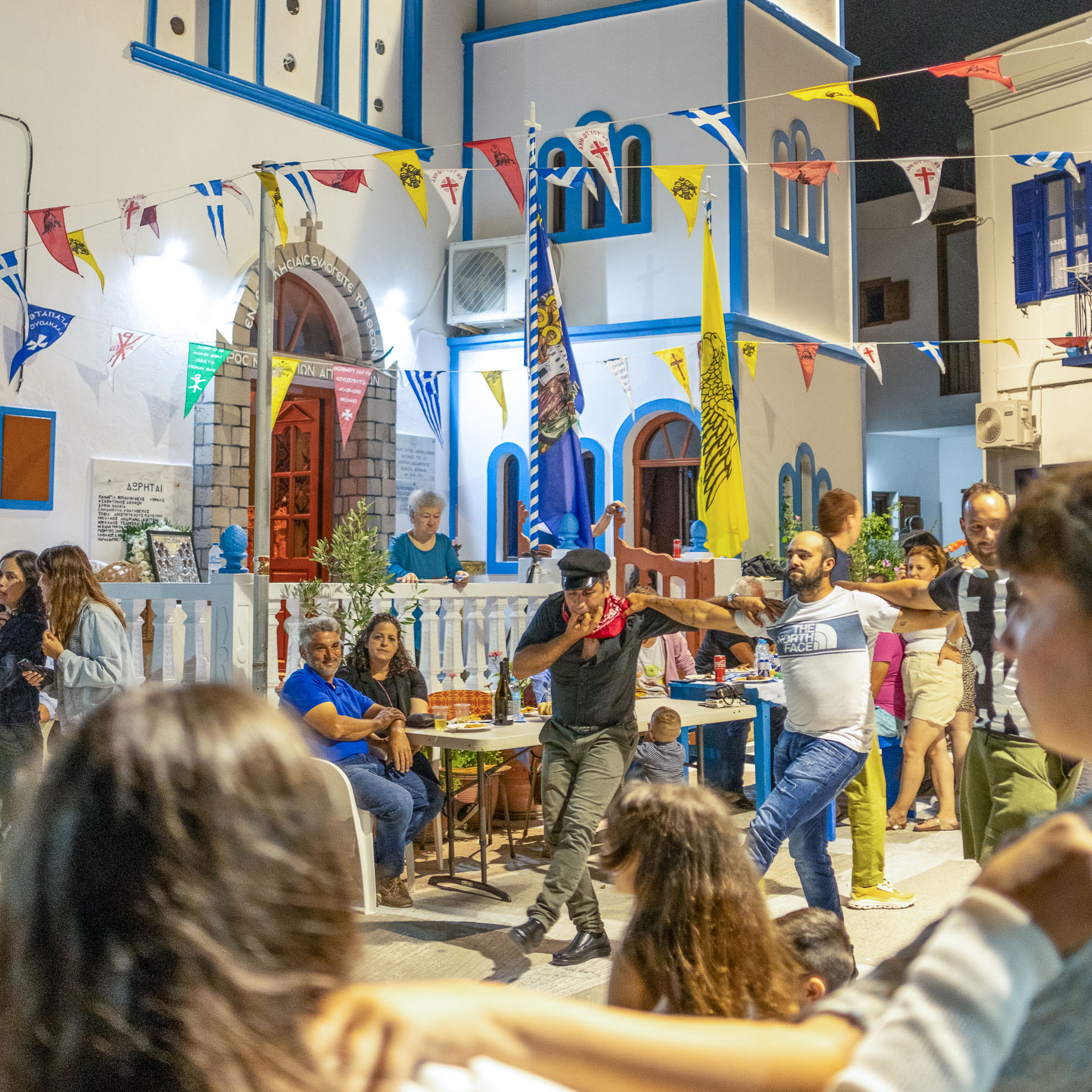
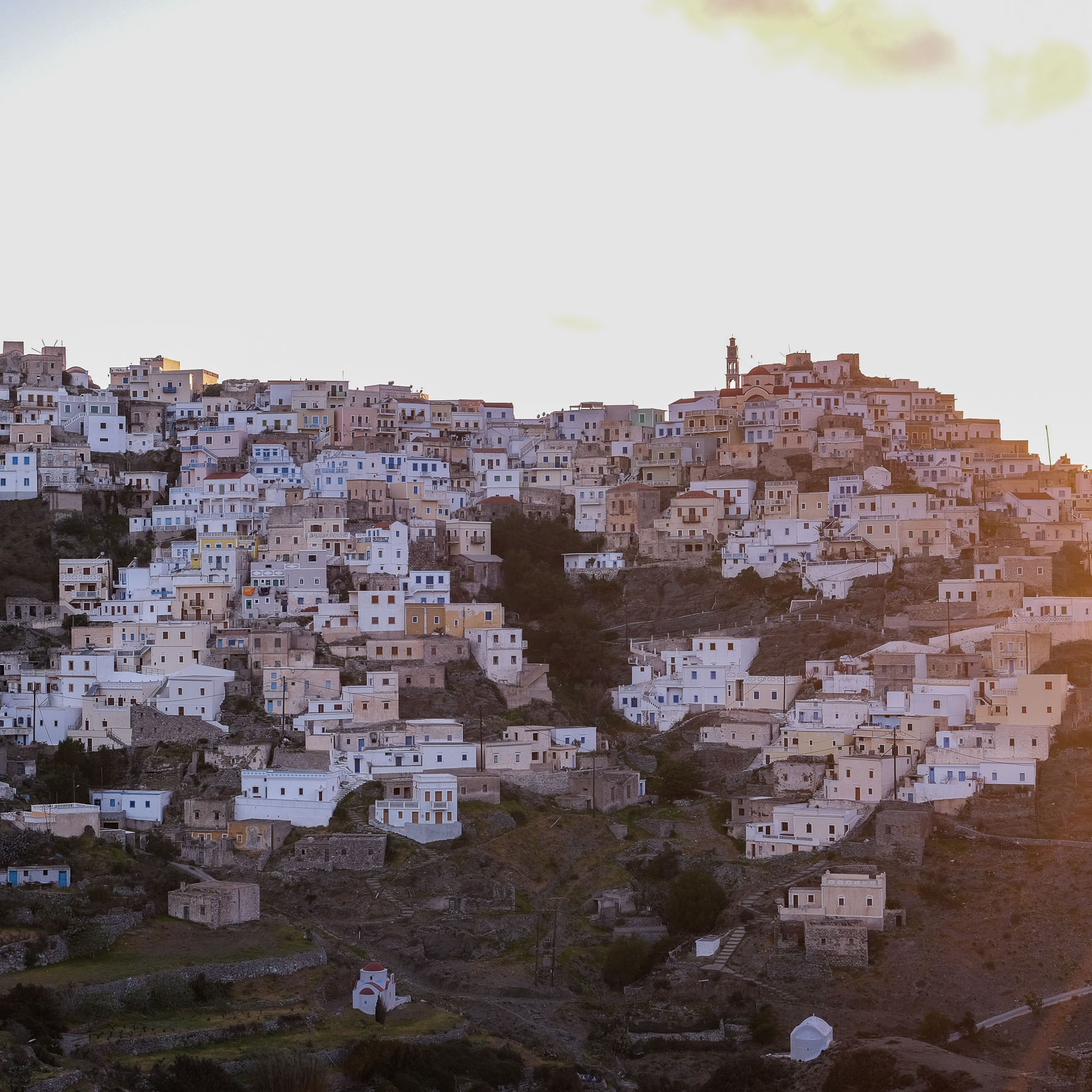
- Eat, drink, and dance during panigiria in Olympos, Karpathos
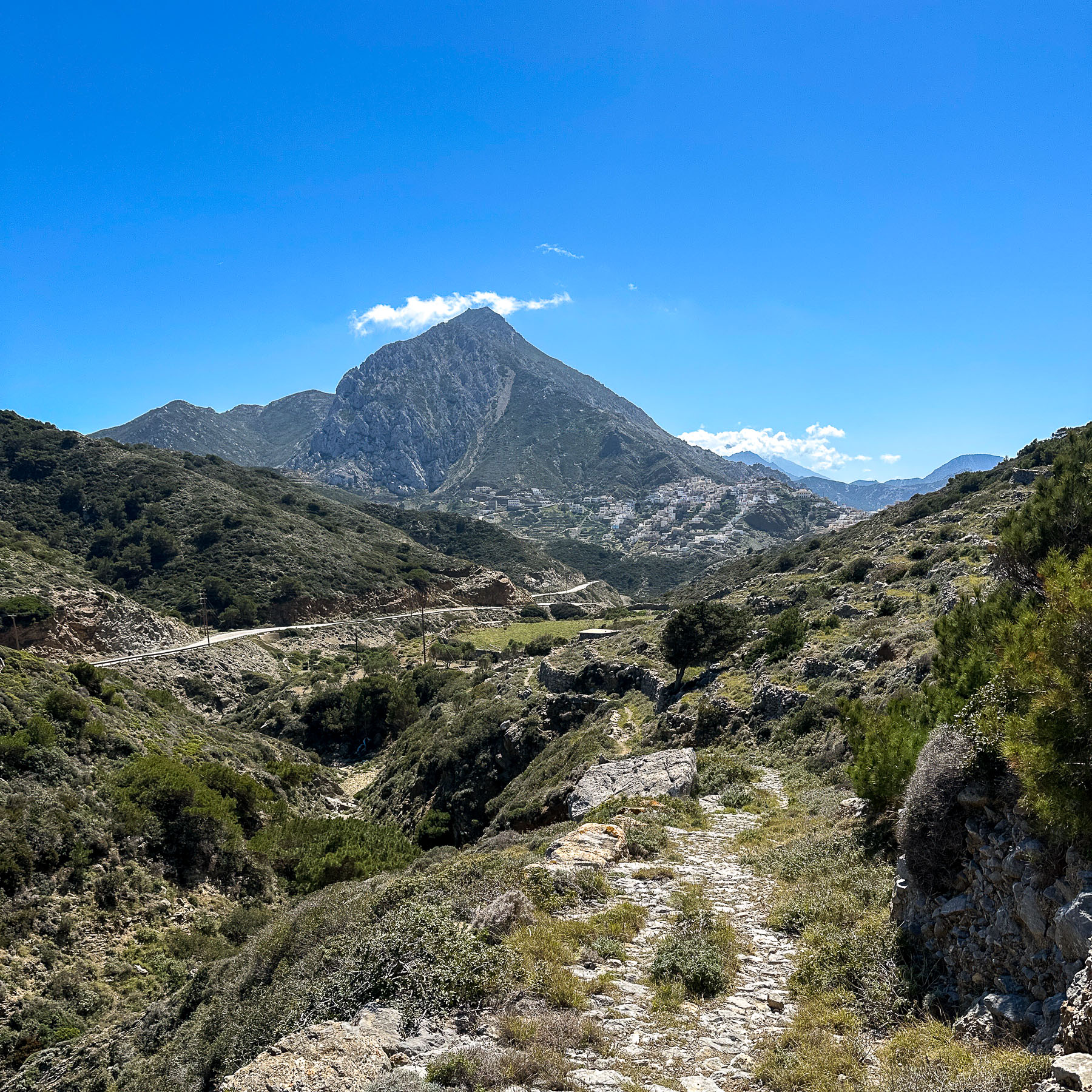
- Hike the historic hilltop trails of Karpathos
- Feast on the hearty yet healthy classics of Greek cuisine





History
The Dodecanese Islands have been inhabited since prehistoric times. Thanks to their close proximity to Crete, the islands came under heavy Minoan influence starting in the second millennium BCE, subsequently ruled by the Mycenaeans and the Dorians. It’s during this time that the islands began to prosper, especially Kos and Rhodes. The Dorians also founded three cities on Rhodes (Lindos, Kameiros and Ialyssos) that together with Kos and the cities of Knidos and Halicarnassus (now Bodrum) on the Anatolian mainland, formed the Dorian Hexapolis.
Like the rest of Anatolia and the Aegean region, development was stifled by the Persian Wars, until the arrival of Alexander the Great (and a short period under Carian rule). Unique to the Dodecanese was their alliance with Egypt following the death of Alexander. Strong commercial ties were cemented with the creation of the Rhodo-Egyptian alliance, which controlled trade throughout the Aegean in the 3rd century BC. With Rhodes at the head, the islands developed into maritime, commercial and cultural centers home to famous schools of philosophy, literature and rhetoric. The Colossus of Rhodes, built in 304 BC, is an apt symbol of their contemporary wealth and power.
In 164 BC, Rhodes signed a treaty with Rome, aligning the islands with the Roman Republic and Rhodes quickly became a schooling center for Roman noble families. Multiple visits by Saint Paul and Saint John led to the conversion of Christianity in the Dodecanese, making them one of the first dominantly Christian regions. Saint John was eventually exiled to Patmos, where he wrote the book of Revelation.
The region was a part of the Byzantine Empire for over 1000 years, and it was during this time that the name ‘Dodecanese’ (meaning 12 islands) emerged. Later, the islands were exploited by the Genoese and Venetians until being sold to the Knights of St. John, who made Rhodes their stronghold. In 1522, the islands were conquered by the Ottomans. Except Rhodes and Kos, the islands submitted to Ottoman rule and were thusly given special privileges, allowing them to prosper. The period around WWI saw various islands controlled by Italy, Great Britain, and France until being officially annexed with the Treaty of Lausanne.
Local Cuisine
The cuisine of the Dodecanese is classical Aegean, and similar to its Greek and Anatolian neighbors. However, the islands’ culinary tradition also reflects its uniquely diverse history with elements of Egyptian, Italian, Turkish, and Cretan ingredients and cooking styles uncommon in the rest of Greece. The barley rusks characteristic of Cretan cuisine are also used extensively in the Dodecanese, as is cumin, also popular in eastern Crete. Egyptian contact can be seen in the islanders’ use of tahini and sesame seeds. Handmade pastas are also common throughout, likely thanks to the islands’ period of Italian rule. Many Turkish dishes such as kapama (stewed lamb cooked in a wood fire oven), kavourmas (cubed meat slowly cooked in its own fat), yaprakia (stuffed grape leaves), and the extensive use of bulgur are also present on the islands.
In addition to the remnants of its former conquerors, Dodecanese cuisine is defined by its history as a poor fishing region with little agricultural potential. Symi and Kalymnos in particular, thanks to their past focus on sponge diving, are home to a wealth of unique seafood dishes. Sponge divers would leave their homes in spring and only return in the fall, and as a result, perfected the art of preserving fish and seafood out of necessity. These now delicacies include parrotfish salted and dried with its intestines, sun-dried lobster tail and octopus called ‘melihlora’, octopus roe bottarga, fried octopus ink, and shellfish preserved in seawater. Octopus is also especially popular and is dipped in ouzo, made into patties, or even used in pasta sauce. While the smaller islands tended to rely on fish and seafood for sustenance, larger islands such as Rhodes, were more fertile. Therefore, a large part of the diet also consists of wheat (in the form of bulgur, bread, rusks, or porridge) or legumes (chickpeas in particular).
Biking
The islands of Kos and Karpathos are home to amazing MTB singletracks, with more cross-country type options available on Kos, Leros, Nisyros, Astypalea, Rhodes, Karpathos, and others. Like all the Greek islands, rides here perfectly combine rocky Aegean landscapes and traditional villages with beaches, and even forests in the case of Kos.
Road biking is also possible on all the Dodecanese Islands, but with shorter rides and less options on smaller islands. However, with populations matching their size it’s these tiny islands that are home to wide open roads and a more unique cycling experience. Larger islands offer longer and more diverse rides, but also have slightly more traffic, especially close to cities and towns.
Hiking
In addition to some of the best mountain biking routes in Turkey, Cappadocia is home to some of the country’s top day hikes. The trails here are smooth and gently sloping enough to allow beginners to soak in the view and so beautiful that even experienced hikers will be kept occupied and excited all day.
Hiking routes commonly run through the famous valleys of Cappadocia, passing rock-cut churches, traditional pigeon houses, perfectly groomed gardens, and the otherworldly rock formations the area is famous for. With history and tradition deeply ingrained into the landscape, our hikes give visitors the chance to experience more than just nature and begin to truly understand the culture of the region.
We often include a mix of the more popular trails, such as Love, Pigeon, Ihlara, and Red Valleys with some less traveled, but equally interesting treks over routes like Zemi, Gomeda, Balkan Deresi, and Meskendir Valleys, and along the skirts of Mt. Akdag over the Balcony Route.
Other nice hikes are found farther north in the Ida Mountains around the ancient city of Assos and deeper into the forested peaks.
Other nice hikes are found farther north in the Ida Mountains around the ancient city of Assos and deeper into the forested peaks.

Culture
One of the best known cultural destinations in the Dodecanese is the Holy Monastery of Saint John the Theologian and the Cave of the Apocalypse on Patmos, where Saint John is said to have received the visions behind and composed the book of revelation. Although they’ve become quite touristic in recent years, villages such as Kos’ Zia and Karpathos’ Olympos are also popular sights and nice places to begin our explorations into traditional village culture before diving deeper. One of our favorite natural sites on the islands is the little-visited volcano of Nisyros. This tiny and veritably-unknown island’s backstreets and undiscovered villages are definitely worth exploring as well. And we’ll also explore the legacy and unique traditions brought about by the sponge diving past of Symi and Kalymnos. Rhodes, as arguable the most historically important Dodecanese islands and one of Greece’s largest, is home to a wealth of fortresses, ancient cities, museums, and monasteries as well.